


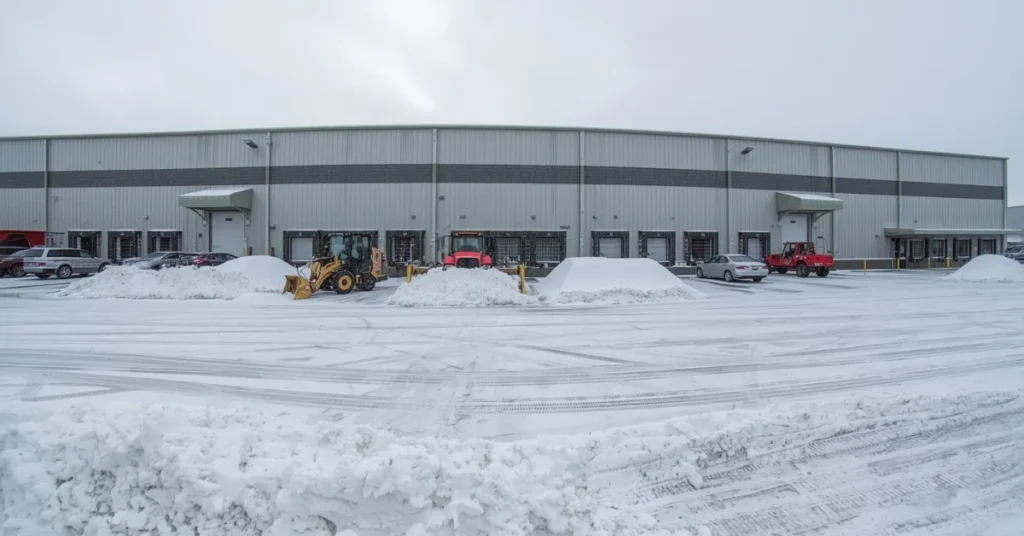
Winter can be a challenging time for warehouse managers and logistics teams. Snow and ice accumulation around loading docks, parking areas, and walkways can disrupt operations and create safety hazards. For businesses that rely on smooth warehouse operations, investing in professional warehouse snow and ice removal services is essential. Effective snow management keeps employees safe, protects inventory, and ensures deliveries continue without interruption.
When it comes to warehouse snow removal, understanding common challenges and implementing proven solutions can save time, money, and frustration. Below, we explore practical strategies for tackling winter’s impact on industrial facilities.
Understanding Common Warehouse Snow Removal Challenges
Snow removal at warehouses is more complicated than clearing a residential driveway. Large open spaces, heavy equipment, and frequent vehicle traffic create unique obstacles.
Heavy Accumulation and Limited Access
Warehouses often have expansive parking lots and loading areas. When snow piles up, it can block access for delivery trucks and employees. Attempting to move snow without proper planning can result in uneven clearing and dangerous ice patches. Prioritizing high-traffic areas and using specialized plowing equipment is crucial.
Ice Formation and Slip Hazards
Even after snow is removed, leftover ice can create hazards for workers and forklifts. This is particularly dangerous around entryways and ramp areas. Applying ice melt products and monitoring temperature changes helps reduce slip risks while maintaining operational flow.
Equipment Limitations
Standard shovels and small snow blowers are insufficient for large industrial spaces. Many warehouses face delays due to underpowered equipment. Investing in industrial-grade snow plows and hiring skilled operators ensures that even heavy snowfalls are handled efficiently.
Effective Strategies for Warehouse Snow Removal
Proactive planning and the right tools are key to efficient warehouse snow removal. Implementing these strategies minimizes downtime and enhances workplace safety.
Develop a Snow Removal Plan
A detailed snow removal plan outlines which areas are prioritized, who is responsible for each task, and the equipment needed. Include contingency steps for extreme weather conditions. Planning ahead prevents confusion during heavy snowstorms and ensures employees are clear on safety protocols.
Use the Right Snow Removal Equipment
Industrial snow removal often requires:
- Heavy-duty plows and skid steers
- Snow blowers capable of handling large volumes
- Ice melt spreaders for entryways and ramps
Using appropriate equipment not only speeds up the process but reduces the risk of damaging warehouse surfaces and vehicles.
Schedule Regular Inspections
Frequent monitoring of parking lots, loading docks, and walkways allows for quick intervention before snow and ice become major issues. Even a light snowfall can create slippery spots if left untreated. Regular inspections help maintain a safe and operational environment.
Preventive Measures for Snow and Ice
Beyond active removal, preventive measures can significantly reduce winter challenges. Staying ahead of snow accumulation saves both time and money.
Apply Ice Melt Early
Spreading ice melt before a snowfall can prevent ice from bonding to concrete surfaces. This simple step minimizes hazardous conditions and reduces the effort needed for clearing later.
Maintain Clear Drainage
Snowmelt can accumulate in low-lying areas, leading to refreezing and unexpected ice patches. Ensure drainage systems are clear and functional to avoid water pooling that creates dangerous surfaces.
Train Staff on Safety Protocols
Warehouse employees should know the correct procedures for navigating snowy and icy areas. Simple training, such as proper footwear and forklift operation on slippery surfaces, reduces workplace accidents.
Common Mistakes to Avoid in Warehouse Snow Removal
Even experienced managers can make mistakes that compromise safety and efficiency. Avoiding these common pitfalls ensures smooth winter operations.
Ignoring Small Snowfall
It may seem harmless to skip clearing light snow, but even thin layers can compact into ice under vehicle traffic. Consistent removal prevents minor snow from becoming a major hazard.
Using Incorrect Ice Melt
Not all ice melt products are suitable for industrial settings. Some can corrode concrete or damage warehouse floors. Always choose products recommended for large commercial areas.
Overlooking Employee Input
Employees on the ground often notice trouble spots before management does. Ignoring their feedback about slippery areas or snow buildup can lead to accidents or workflow interruptions.
Benefits of Professional Warehouse Snow Removal Services
Hiring professional services like Morfin Warehouse Snow Removal Services can relieve the stress of winter logistics. Trained crews bring experience, industrial equipment, and safety expertise that ensures fast and reliable snow clearance.
- Reduces workplace accidents caused by ice and snow
- Maintains smooth operational flow during storms
- Saves time for managers and employees
- Provides consistent results even in severe weather
Outsourcing snow removal allows warehouse teams to focus on core operations without worrying about winter hazards.

FAQ
What is the difference between warehouse snow removal and residential snow removal?
Warehouse snow removal requires industrial equipment and strategic planning due to larger areas, vehicle traffic, and safety regulations. Residential snow removal typically focuses on driveways and sidewalks.
How often should snow be cleared from a warehouse lot?
Snow should be removed immediately after accumulation, especially in high-traffic areas. Regular inspections help determine if additional clearing is needed throughout the day.
Can ice buildup be prevented completely?
While it’s impossible to prevent all ice, proactive measures like applying ice melt early and maintaining drainage significantly reduce dangerous patches.
Is professional warehouse snow and ice removal cost-effective?
Yes, investing in professional services reduces accidents, downtime, and potential liability costs. The efficiency and safety benefits often outweigh the expense.
What types of equipment are used for warehouse snow removal?
Industrial snow plows, skid steers, snow blowers, and ice melt spreaders are commonly used. Using the right equipment ensures thorough and safe clearing.
Conclusion
Winter snow and ice can disrupt warehouse operations, compromise safety, and slow down deliveries. Addressing these challenges proactively with proper equipment, planning, and preventive measures ensures a safer, more efficient workplace. From scheduling inspections to applying ice melt and investing in industrial snow removal equipment, every step helps maintain smooth operations. For warehouses looking for a reliable solution, partnering with professionals like Morfin Warehouse Snow Removal Services ensures expert handling of winter hazards, keeping employees safe and operations running without interruption. Don’t wait for the first snowfall to take action; a proactive approach today can prevent major headaches tomorrow.